From the New York Times:


From the New York Times:
More and more researchers adopt the programming language Julia.
India follows suggestions to fight tax evasion by taking high denomination notes out of circulation … and introducing new ones. Until the end of the year, Indians may exchange the old banknotes against new ones, at banks or post offices, by identifying themselves. On his blog, J P Koning discusses earlier demonetization episodes in Iraq and Sweden.
India’s move does not exactly follow the well publicized suggestions currently debated. But it might work.
US voters have abandoned political correctness. Have they also abandoned decency?
They have clearly voted for “change.” Eight years ago, they did the same.
They have voted against competence according to common standards. Maybe because they perceived competence to be correlated with “no change.” Maybe because they viewed competence as a weakness. Picking non-competent leaders can pay off in specific bargaining situations. In general, it is unlikely to pay off in the longer term.
Race was key. Whites strongly favored Trump over Clinton, and non-whites strongly favored Clinton over Trump. Non-whites will continue to grow as a share of the voting population.
Voters were unhappier than ever with the two candidates. Are they sufficiently unhappy to trigger the beginning of the end of the system of presidential primaries?
Some members of the old elite have lost. Who are the new members to follow them? How will the elites respond to this experience? By becoming more inclusive? Or by protecting themselves from the mob?
The new vision of American foreign policy is less clear than ever. Will the traditional US-allies rise to the challenge? European aerospace and defense stocks. US aerospace and defense stocks.
We have seen in the past how major political shocks can affect a country’s attractiveness for foreigners, its role as a cultural and scientific center, and in the longer run, its international influence. Will we see the same in the US?
How will the American election affect how other countries view the case for or against democracy (see earlier post)?
In the New York Times, Paul Krugman fears that America is a failed state and society. He writes
There turn out to be a huge number of people — white people, living mainly in rural areas — who don’t share at all our idea of what America is about. For them, it is about blood and soil, about traditional patriarchy and racial hierarchy. And there were many other people who might not share those anti-democratic values, but who nonetheless were willing to vote for anyone bearing the Republican label.
Food for All matches restaurants that miscalculated demand with hungry consumers.
On his blog, J P Koning discusses Kenneth Rogoff’s proposal to abolish high denomination notes (discussed earlier). Koning concludes:
I agree with Rogoff’s general point that it makes sense to burden cash users with ever more work since this burden disproportionately falls on heavy users like criminals. But Rogoff hasn’t yet convinced me that the status quo policy of gradually increasing the workload involved in cash usage (via inflation) needs to be sped up by a sudden removal of every bill above the $10. After all, the Swedes are setting an example of how a policy of gradualism can be twinned with tax policy in order to get some of the very effects that Rogoff advocates, namely pulling people out of the underground economy into the legal economy.
Koning refers to Martin Enlund’s post on the Nordea blog; Enlund suggests that decreased cash demand in Sweden may partly be due to policy reforms that rendered tax evasion less attractive.
Figure from Enlund blog:

The NZZ compares salaries of central bank governors. Switzerland comes first.

In a CEPR discussion paper, Jan van Ours and Yuxin Yao conclude that in the Netherlands,
for male workers there is a significant wage penalty of dialect-speaking while for female workers there is no significant difference.
Andy Borowitz in the New Yorker.
The Economist reports about a new digital currency platform, Zcash. The platform could handle more transactions than for example, Bitcoin. The open-source project backed by outside investors offers confidentiality:
Bitcoin obscures the identity of currency owners, but the “blockchain”, the ledger that keeps track of all the coins, is open and can be analysed to see the flows of funds. This is a serious barrier for banks: blockchains could reveal their trading strategies and information about their customers. Zcash, by contrast, shields transactions from prying eyes with a scheme based on “zero-knowledge proofs” (hence the “Z” in its name). These are cryptographic protocols proving that a statement (who owns coins, for instance) is true without revealing any other information (how many and where the money came from). And it is by selling this technology—called “zk-SNARK” (don’t ask)—to banks that Zcash, the company, wants to earn its keep.
In the New Yorker, Caleb Crain reviews the case. It’s a difficult case to make if most voters are uninformed.
Jamming the stub of the Greek word for “knowledge” into the Greek word for “rule,” Estlund coined the word “epistocracy,” meaning “government by the knowledgeable.” It’s an idea that “advocates of democracy, and other enemies of despotism, will want to resist,” he wrote, and he counted himself among the resisters. As a purely philosophical matter, however, he saw only three valid objections.
First, one could deny that truth was a suitable standard for measuring political judgment. This sounds extreme, but it’s a fairly common move in political philosophy. After all, in debates over contentious issues, such as when human life begins or whether human activity is warming the planet, appeals to the truth tend to be incendiary. Truth “peremptorily claims to be acknowledged and precludes debate,” Hannah Arendt pointed out in this magazine, in 1967, “and debate constitutes the very essence of political life.” Estlund wasn’t a relativist, however; he agreed that politicians should refrain from appealing to absolute truth, but he didn’t think a political theorist could avoid doing so.
The second argument against epistocracy would be to deny that some citizens know more about good government than others. Estlund simply didn’t find this plausible (maybe a political philosopher is professionally disinclined to). The third and final option: deny that knowing more imparts political authority. As Estlund put it, “You might be right, but who made you boss?”
On VoxEU, Kevin Bryan nicely summarizes progress and the lack of it in developing theories of the firm.
On Marginal Revolution, Alex Tabarrok reports based on a NY Times feature that genetically modified crops do not deliver what they were expected to.
Jointly with the Journal of Monetary Economics and the Swiss National Bank, the Study Center Gerzensee organized a conference in honor of Bob King, long-term supporter of the Study Center.
Program: PDF.
Jaume Ventura’s discussion of a paper on trade and growth by Alvarez and Lucas: PDF.
My discussion of a paper on debt and debt constraints by Bhandari, Evans, Golosov, and Sargent: PDF.
From the NZZ:
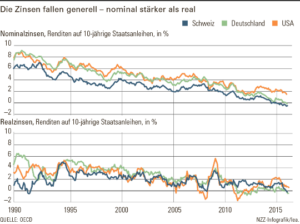
On his blog, Dani Rodrik argues that
the fact that an international rule is negotiated and accepted by a democratically elected government does not inherently make that rule democratically legitimate.
Rodrik distinguishes two types of international commitments. On the one hand, there are commitments that help to overcome time-inconsistency problems.
[For example, the government] would like to commit to free trade or to fiscal balance, but realizes that over time it will give in to pressure and deviate from what is its optimal policy ex ante. So it chooses to tie its hands through external discipline. This way, when protectionists and big spenders show up at its door, the government says: “sorry, the WTO or the IMF will not let me do it.” Everyone is better off, save for the lobbyists and special interests. This is the good kind of delegation and external discipline.
On the other hand, there are commitments that mainly serve to tie the hands of current or future political opponents.
From an ex-ante welfare standpoint, this strategy has much less to recommend itself. The future government may have better or worse ideas about government policy, and it is not clear that restricting its policy space is a win-win outcome. This kind of external discipline has much less democratic legitimacy because, once again, it privileges one set of interests against others.
In an earlier contribution, I have argued that a key role of the European Union should be to play the former role.
On VoxEU, Gianni La Cava summarizes his research on the secular rise in the housing share of US income.
In the US national accounts, income accruing to the housing sector is measured as ‘net housing capital income’, or simply, net rental income (i.e. gross rents less housing costs, such as depreciation and property taxes). This measure includes rental income going to both owner-occupiers (imputed rent) and landlords (market rent). The very detailed nature of the Bureau of Economic Analysis’ regional economic accounts allows for similar estimates of housing capital income to be constructed for each US state spanning several decades. …
The owner-occupier share of aggregate income has risen from just under 2% in 1950 to close to 5% in 2014 … . The share of income going to landlords (i.e. market rent) has also doubled in the post-war era. But, in aggregate, the effect of imputed rent is larger … because there are nearly twice as many home owners as renters in the US economy. …
… the long-run rise in the housing capital income share is fully concentrated in states that face housing supply constraints.
In a BIS working paper (January 2015), Bengt Holmstrom summarizes some of the implications of the research on information insensitive debt. He cautions against moves to increase transparency in debt markets and defends the shadow banking system. He explains why opacity and information insensitivity are valuable and argues that debt-on-debt arrangements are (privately) optimal.
It all started with pawn shops:
The beauty lies in the fact that collateralised lending obviates the need to discover the exact price of the collateral. …
Today’s repo markets … are close cousins of pawn brokering with similar risks for the parties involved. … the buyer of the asset (the lender) bears the risk that the seller (the borrower) will not have the money to repurchase the asset and just like the pawnbroker, has to sell the asset in the market instead. The seller bears the risk that the buyer of the asset may have rehypothecated (reused) the posted collateral and cannot deliver it back on the termination date. … the risk that a pawnbroker may sell or lose the pawn was a big issue in ancient times and could explain why the Chinese pawnbrokers were Buddhist monks. …
People often assume that liquidity requires transparency, but this is a misunderstanding. What is required for liquidity is symmetric information about the payoff of the security that is being traded so that adverse selection does not impair the market. …
… stock markets are in almost all respects different from money markets …: risk-sharing versus liquidity provision, price discovery versus no price discovery, information-sensitive versus insensitive, transparent versus opaque, large versus small investments in information, anonymous versus bilateral, small unit trades versus large unit trades. … money markets operate under much greater urgency than stock markets. There is generally very little to lose if one stays out of the stock market for a day or longer. This is one reason the volume of trade is very volatile in stock markets. In money markets the volume of trade is very stable, because it could be disastrous if, for instance, overnight debt would not be rolled over each day. …
… debt-on-debt is optimal … . It is optimal to buy debt as collateral to insure against liquidity shocks tomorrow and it is optimal to issue debt against that collateral tomorrow. In fact, repeating the process over time is optimal, too, so debt is in a very robust sense the best possible collateral. This provides a strong reason for using debt as collateral in the shadow banking system. …
Panics always involve debt. Panics happen when information insensitive debt (or banks) turns into information-sensitive debt.
VoxEU, October 19, 2016. HTML.
VoxEU, October 11, 2016, with Martin Gonzalez-Eiras. HTML.
In Nature, Tom Clynes reports about research indicating that École Normale Supérieure has the highest proportion of undergraduates that eventually win a Nobel prize. The California Institute of Technology comes second ahead of Harvard, Swarthmore, Cambridge, École Polytechnique, MIT, Columbia, Amherst, and Chicago.
In the Guardian, Olivia Solon reports about the discussion on whether life as we experience it likely is a simulation.
Pro:
… videogames are becoming more and more sophisticated and in the future we’ll be able to have simulations of conscious entities inside them. … If there are many more simulated minds than organic ones, then the chances of us being among the real minds starts to look more and more unlikely.
… That we might be in a simulation is … a simpler explanation for our existence …
Con:
… if we are in a simulation then we have no clue what the laws of physics are.
Hybris.
SRF, October 8, 2016. Link to MP3.
The Economist suggests that Danish Hygge (or German Gemütlichkeit) might go hand in hand with exclusion of strangers.
Denmark’s own natives may rank it top for happiness, but the immigrants in the survey [among expatriates] ranked it 60th in terms of friendliness, 64th for being made to feel welcome, and 67th for the ease of finding friends. … If cultures are obsessed with the joys of relaxing with old friends, perhaps it is because they find it stressful to make new ones.
On VoxEU, Stefan Avdjiev, Robert McCauley, and Hyun Song Shin discuss how a focus on net capital flows between countries can mislead policy analysts if they neglect heterogeneity between sectors in a country and/or non-congruence of economic and currency area that is, if they assume the “triple coincidence” between economic area, decision-making unit, and currency area.
The triple coincidence misleads
because it obscures gross flows, …
in that it gives insufficient weight to international funding currencies that are extensively borrowed outside the borders of their home countries …
if it glosses over the relevant decision-making unit by aggregating too much.