Tag Archives: Financial stability

“Dirk Niepelt on the Political Economy of CBDCs,” Central Banking, 2026

Central Banking, March 25, 2026. HTML. Interview text:

1. A number of central banks are currently working on introducing retail CBDC. In your view, what are the risks they most frequently overlook?

One risk is losing sight of the bigger picture. Retail CBDC is not merely a technological innovation that may or may not help respond efficiently to structural change in the payment system. It can also serve as a tool for broader reform of the monetary architecture. The overarching objective should be to provide liquidity to Main Street at minimum social cost, and the debate about retail CBDC should focus on whether it can help achieve that goal. Instead, the discussion often centers on secondary objectives and insufficiently questions the status quo.

2. The ECB, for example, argues that holding limits will ensure that commercial banks do not feel too much pain from the digital euro as deposit flight will be small. What is your view?

Why would commercial banks’ “pain” be a primary concern for policymakers? Even if it were, the fears around deposit flight are often overstated. Retail CBDC does not remove funds from financial markets—it reallocates them from banks to the central bank, which reinvests the funds. Depending on policy design, retail CBDC may have little or no effect on banks’ funding conditions, and even when it does, this is not necessarily harmful. If policymakers are genuinely concerned about deposit flight, the appropriate tool is remuneration, which directly influences demand. In contrast, holding limits are a blunt instrument: they fragment markets, create incentives to circumvent the restrictions, and can encourage runs into other assets.

3. How should commercial banks prepare for CBDC issuance?

Commercial banks should first consider what societal benefits their money creation provides. If these societal benefits exist and are significant, there is little reason for concern. If, however, bank money creation primarily serves banks or their clients without generating substantial social value, banks should prepare for reduced deposit funding. Even in that case, losing access to deposits or inexpensive substitutes would not spell the end of banking—banks generate value in many other ways.

4. Most central banks are pursuing non-remunerated CBDCs. Is this the right course of action?

No. A retail CBDC that does not pay interest is less attractive as a store of value, making bank deposits relatively more appealing and increasing the payment system’s dependence on fragile, too-big-to-fail banks. It is difficult to justify introducing retail CBDC without allowing it to compete with bank deposits—unless the goal is simply to preserve banks’ money-creation business model, which is not obviously a societal objective. Non-remuneration also reduces retail CBDC’s usefulness as payment instrument, potentially undermining any other objectives that the CBDC is intended to achieve.

5. What is the interplay between the policy choices of holding limits and remuneration?

Remuneration and holding limits influence retail CBDC in fundamentally different ways. Remuneration is a price instrument: by adjusting the interest rate on CBDC, the central bank can influence how much households and firms choose to hold. Holding limits, by contrast, are quantity restrictions applied to individual users. When demand varies across households and firms, these limits create distortions and incentives for circumvention.

6. The post-GFC environment saw plenty of public anger directed at the banking sector, which was seen to have managed to get away “scot-free” thanks to generous QE policies from central banks, with plenty of arguments connecting banking sector bailouts and the “populism”, for lack of a better term, of the 2010s. How would issuing digital public money play into this?

Indeed, there is a view that banks, their staff, or their customers privatize gains while socializing losses. If true, this would amount to large implicit subsidies and distortions. Banks have also been seen to preserve this asymmetry, lobbying policymakers and playing a game of whack-a-mole with regulators. Retail CBDC could offer a new avenue to address this situation. On one hand, it increases transparency in the monetary architecture, fostering accountability and raising public awareness. On the other hand, it acts as a “carrot”—an attractive alternative payment instrument that can draw users away from deposit holdings at fragile banks—replacing the “stick” of regulation, which often lags and carries collateral costs. The success of this strategy depends on making retail CBDC a genuinely appealing substitute for deposits, unlike policies that rely on stringent holding limits and non-remuneration.

7. If central banks found themselves more “politicised” by issuing a CBDC, what policy choices could they make to avoid this perception?

The main risks associated with retail CBDC may indeed lie in the realm of political economy. Its successful introduction would expand the central bank’s balance sheet, likely triggering demands and proposals from policymakers outside the central bank as well as from interest groups. This makes institutional design crucial. The decision to introduce retail CBDC should not rest with the central bank, since the implications extend well beyond monetary and financial stability. At the same time, central banks must retain full operational control over the instruments necessary to fulfill their mandate, particularly price stability. Clear governance arrangements and a well-defined mandate are essential to ensure that retail CBDC does not blur the boundary between monetary policy and fiscal or industrial policy objectives.

8. What are the main academic debates surrounding CBDC? How should central banks think about them?

The literature has addressed “micro” and “macro” dimensions of retail CBDC. The former concern, for example, privacy and its implications for CBDC demand. Macro issues typically relate to banks, financial intermediation, credit, and investment. I find it useful to organize the findings in this macro literature around the core features that make CBDC relevant in the first place. Yet these features have not been emphasized strongly. Rather than focusing on the fundamental sources of CBDC’s macroeconomic relevance, the literature often shows how accompanying policy choices shape its economy-wide implications. These accompanying choices—for example, regarding CBDC remuneration, the regulatory treatment of bank deposits relative to central bank credit facilities, or the design of central bank operating frameworks—are frequently treated as secondary when they are, in fact, decisive. Even slight changes in model assumptions can make results that suggest CBDC is transformative collapse toward neutrality. A key lesson of the literature, therefore, is that accompanying policy choices are of first-order importance for retail CBDC. This underscores that political economy considerations are equally central.

“Central Bank Digital Currency, the Future of Money, and Politics,” VoxEU, 2026

VoxEU, March 6, 2026. HTML.

Ultimately, the macroeconomic significance of CBDC is shaped by policy choices, and political economy determines whether CBDC becomes a significant factor. To understand CBDC policy, don’t just think macro — think political economy.

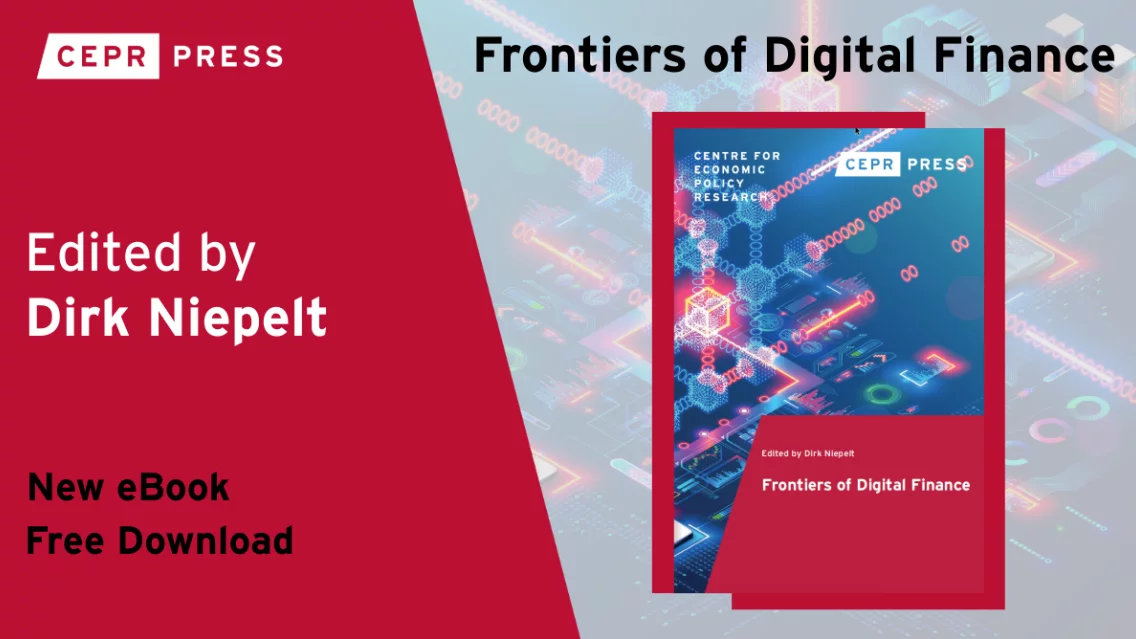
“Frontiers of Digital Finance,” CEPR, 2025

CEPR eBook, 12 November 2025. PDF, HTML.

VoxEU column: Frontiers of Digital Finance: A Global Perspective. HTML.

VoxEU column: Frontiers of Digital Finance: Stablecoins, monetary ‘singleness’, tokenisation, and decentralised finance. HTML.

My introduction to/summary of the book:

The digitisation of payment, trading, and settlement systems is reshaping the financial architecture. New technologies are transforming how value is created, stored, transferred, and accounted for, altering the balance between public and private money, enabling the bundling of services, challenging traditional financial institutions, and prompting a wave of regulatory and institutional responses.

The global picture is uneven. Some regions are leapfrogging others, and conflicting ideologies about the proper role of the state in money give rise to fragmentation and concerns about monetary sovereignty.

This book offers an overview of major trends, as analysed by leading researchers and policymakers. It is structured in four parts. Part 1 presents regional perspectives, examining the approaches taken by India, Brazil, sub-Saharan Africa, the United States, and the euro area. For the euro area, the focus is on the digital euro and its implications for monetary sovereignty, privacy, and holding limits aimed at preserving financial stability.

Part 2 delves into stablecoins – the shooting stars in the digital financial ecosystem. Their evolution has spurred a flurry of policy debate, with the European Union’s Markets in Crypto-Assets Regulation (MiCAR) and the US GENIUS Act now offering greater regulatory clarity.

Part 3 turns to the concept of monetary ‘singleness’ – the principle that all forms of money in a currency area should be fully interchangeable and trade at par. As new digital forms of money proliferate, the cohesion of the monetary system may be called into question.

Part 4 brings together chapters on tokenisation, digital platforms, and decentralised finance (DeFi), and their broader impact on service bundling, credit allocation, financial inclusion, and consumer protection.

Regional perspectives

In the opening chapter of Part 1, Amiyatosh Purnanandam describes how India’s Unified Payments Interface (UPI), launched in 2016, has improved the efficiency of account-based payment systems by addressing the core frictions of information exchange, authentication, and final settlement. Developed under a public-private partnership, UPI enables real-time, low-cost, and interoperable digital payments between any two entities, regardless of their bank or payment service provider. India overcame challenges around identity verification and financial inclusion by implementing a nationwide system of digital, biometric-based identification and by expanding access to bank accounts for large segments of the unbanked population. These developments, alongside digital infrastructure investments and regulatory support for private sector participation, allowed UPI to lower transaction costs and provide small businesses with digital transaction histories that improved access to credit.

Purnanandam highlights how demonetisation and the COVID-19 pandemic accelerated the adoption of UPI. The system’s interoperable design allows users to choose among competing apps, reinforcing network effects and encouraging innovation. Early adoption by banks in some areas led to persistent increases in digital payment usage. Moreover, UPI has enabled streamlined welfare disbursements, with nearly 60% of subsidy payments being delivered directly into beneficiary accounts by 2024. According to Purnanandam, the UPI experience demonstrates the critical role of coordinated efforts across public and private sectors, along with a flexible and inclusive regulatory framework.

Fabio Araujo and Arnildo da Silva Correa describe the Central Bank of Brazil’s comprehensive innovation strategy, Agenda BC#, fostering tokenisation and integration to enable faster, more transparent, and programmable asset transfers. The agenda is built around four interlinked pillars: (1) Pix, an instant payment system launched in 2020, which also supports a ‘synthetic’ retail central bank digital currency (CBDC) model; (2) Open Finance, which promotes secure data sharing and competition; (3) Drex, Brazil’s central bank digital currency designed as a platform for a tokenised economy; and (4) the internationalisation of the Brazilian real, through regulatory modernisation and cross-border interoperability. Each component reinforces the others, creating a cohesive, digital financial ecosystem that enhances efficiency, security, innovation, and inclusivity.

Pix marked the foundational shift, offering a public infrastructure for instant, programmable payments that has been widely adopted across Brazil and credited with improving financial inclusion and spurring innovation. Open Finance expanded the ecosystem by allowing consumers to share financial data among institutions, unlocking more tailored services and competitive offerings. Drex builds on this by introducing distributed ledger technology, enabling advanced programmability, atomicity, and secure, tokenised deposits while incorporating privacy safeguards such as zero-knowledge proofs. Finally, internationalisation efforts are aligning domestic systems with global standards. Together, these initiatives aim to create a user-centric financial system where services are accessed through intelligent aggregators, enhanced by AI and driven by user-controlled data.

Luca Ricci and co-authors describe how digital innovations are reshaping the payment landscape across sub-Saharan Africa, facilitating financial inclusion, payment efficiency, lower remittance costs, and reduced informality. Private mobile money has been particularly impactful, with account ownership far outstripping the growth of traditional bank accounts. While central bank digital currencies, fast payment systems, and crypto assets are debated (with Nigeria having already launched the eNaira), their broader adoption is held back by weak digital infrastructure, limited institutional capacity, low levels of financial and digital literacy, and the high costs of system deployment. Cross-border payments remain slow and costly, and fragile governance frameworks heighten concerns about consumer protection, data privacy, and financial integrity.

To address these challenges, the authors outline four policy priorities: (1) investment in infrastructure and skills; (2) supporting private innovation within secure and competitive regulatory frameworks that enable interoperability and reinforce governance; (3) positioning public digital tools to complement – rather than compete with – private solutions, based on assessments of market gaps and resource needs; and (4) fostering regional and international coordination to ensure interoperability and resilience. Ultimately, digital payment reforms must be anchored in sound macroeconomic policies that preserve monetary sovereignty and financial stability.

Michael Lee argues that the 2025 Executive Order on digital financial technology and the GENIUS Act represent a strategic shift in the United States towards private sector-driven innovation in blockchain-based financial systems. The Executive Order rules out the development of a CBDC while endorsing a technology-neutral approach and regulatory clarity for stablecoins. The GENIUS Act establishes a federal framework for fiat-backed payment stablecoins, mandating at-par redemption, backing primarily by US dollar cash and cash equivalents, and regulatory oversight. Regarding the more than 340 stablecoins in circulation – 97% dollar-denominated and dominated by Tether and Circle – concerns remain over reserve transparency, and redemption practices vary widely.

Beyond stablecoins, Lee describes the increasing tokenisation of Treasury funds and commercial bank deposits. Tokenised US Treasury funds are largely held by long-term investors or used as on-chain reserves. Deposit tokens and tokenised deposits typically align with existing regulatory standards – including full know-your-customer (KYC)/anti-money laundering (AML) compliance and access via whitelisting – and can pay interest. In contrast, stablecoins circulate more freely (issuers functionally manage a whitelist only at the issuance stage) but are barred from offering interest directly under the GENIUS Act; however, issuers often partner with platforms to indirectly deliver yield. Together, these instruments form a spectrum, each balancing accessibility and return in different ways.

Ulrich Bindseil and Piero Cipollone argue that central bank electronic cash (CBEC) is essential to preserving monetary sovereignty, as private (often foreign) service providers increasingly dominate retail payments. This carries significant risks: rising payment costs due to oligopolistic market power, reduced financial and monetary stability, loss of seignorage income, and increased vulnerability to geopolitical risks. Bindseil and Cipollone present CBEC not as a disruption but as a necessary evolution to ensure the continued public provision of a neutral, secure, and sovereign monetary instrument that is designed to complement rather than replace commercial bank money.

The authors emphasise that monetary sovereignty faces new threats from globalisation, the advent of new technologies such as public blockchains, and a surge of nationalism that dismisses the merits of international co-operation. CBEC helps counter these threats across five dimensions: it protects macro-financial stability by preventing dollarisation; it ensures access to payment systems without abuse of market power; it preserves seigniorage income and the financial independence of central banks; it reduces strategic dependencies on foreign actors; and it protects informational sovereignty by avoiding overreliance on foreign-owned platforms.

Maarten van Oordt argues that the accelerating shift away from cash in the euro area is driving a significant erosion of privacy in payments. Unlike cash, electronic payments generate detailed records that are monitored by payment service providers and subjected to regulatory oversight. These data are not only used for compliance but also for commercial purposes, and they can be leveraged not just to monitor but also to censor or exclude individuals. The author emphasises that common justifications for payment surveillance – such as crime prevention and tax enforcement – do not automatically warrant broad monitoring powers in a democratic society.

Van Oordt does not expect the currently proposed digital euro design, which includes both online and offline payment options, to close the growing ‘privacy gap’ in retail payments. Online digital euro payments would be processed centrally, offering little improvement over existing systems, and, depending on the robustness of pseudonymisation techniques, could even exacerbate privacy risks. Offline payments, while potentially more private, face challenges such as usage limits and unresolved security concerns. Without critical amendments – such as enabling remote payments through offline balances or designing online payments to emulate the anonymity of cash – the author foresees the digital euro as heightening surveillance risks. He stresses that privacy in payments is a public good and warns that failing to safeguard it in the digital age would squander a crucial opportunity to redesign the financial system in such a way that upholds individual autonomy and democratic values.

Katrin Assenmacher and Oscar Soons explain that the European Commission’s June 2023 legislative proposal tasks the European Central Bank (ECB) with developing instruments to limit the use of the digital euro as a store of value, including the introduction of individual holding limits. These limits are intended to balance three objectives: enabling convenient payments; ensuring smooth monetary policy transmission; and safeguarding financial stability. The authors describe the ECB’s methodology for calibrating these limits so they are high enough for payment use but low enough to prevent significant bank deposit outflows that could destabilise funding structures.

To assess the appropriate holding limits, the ECB considers both a business-as-usual scenario – where the digital euro is mainly used for payments – and a flight-to-safety scenario, which involves mass withdrawals from banks during crises. Surveys and econometric analyses yield a broad range of estimates for digital euro demand. However, even under conservative assumptions, research indicates that large deposit outflows would likely only arise if individual holding limits exceeded €5,000, at which point banks would need to rely more heavily on central bank or market-based funding to manage liquidity pressures.

Stablecoins

In the first chapter of Part 2, Hugo van Buggenum, Hans Gersbach, and Sebastian Zelzner discuss how stablecoins – digital assets pegged to fiat currencies – have rapidly evolved from niche instruments into a major segment of digital finance. While fiat-backed stablecoins promise to combine the technological advantages of crypto with the stability of traditional money, depegging episodes underscore their vulnerability to run risks due to illiquid reserves, limited issuer commitment, and noisy market signals. Trading on active secondary markets can mitigate run incentives by giving holders alternative exit options when redemptions are restricted.

The authors discuss how the EU MiCA Regulation and the US GENIUS Act address systemic risks posed by stablecoins, focusing on reserve quality, redemption rights, and transparency. They suggest that well-designed redemption restrictions – such as gates or fees – should be permitted to prevent destabilising runs. They also caution against the remuneration of stablecoins, as interest payments could trigger destabilising competitive dynamics and coordination failures across issuers, and examine potential effects on banks, monetary policy transmission, and overall financial stability.

Rodney Garratt highlights the dramatic growth of the US dollar-denominated stablecoin market and the fundamental regulatory shift that now encourages institutional participation, including by commercial banks. The author expects the entry of traditional financial institutions to reshape the competitive landscape, with banks serving their regulated clients via public blockchain-based payment rails, while existing issuers continue to operate within the crypto ecosystem.

Garratt likens stablecoins to digital travellers’ cheques – clearing instruments redeemable at par but not tied to individual account holders. As banks enter the space, redemption frictions and interoperability challenges echo historical issues from the pre-clearinghouse era of cheque processing. He argues that a universal stablecoin clearing system will be crucial for broader adoption, ensuring fungibility and monetary singleness across issuers. While stablecoins may not offer clear advantages in many domestic use cases – given the rise of real-time payment systems – he sees potential in global, programmable transactions, particularly for corporate users needing low-cost, high-speed, cross-border payments. Garratt predicts bank-issued stablecoins will have short lifecycles, acting as temporary payment instruments rather than long-term stores of value.

Steve Cecchetti and Kermit Schoenholtz compare stablecoins and tokenised deposits within the context of the new US regulatory framework. They note that although the GENIUS Act prohibits interest payments to holders, limits eligible reserve assets, and enforces compliance with KYC, AML, and anti-terrorist financing (ATF) standards, it still contains significant regulatory gaps. Platforms can circumvent the interest ban by offering yield-like ‘rewards’; reserve requirements permit exposure to run-prone assets like prime money market funds and uninsured bank deposits; and enforcing illicit-use restrictions is particularly challenging for users of noncustodial wallets. Most notably, the absence of capital requirements raises doubts about the ability of stablecoins to serve as safe, information-insensitive assets under stress.

According to the authors, tokenised bank deposits offer a more stable and robust alternative, combining the legal protections of traditional bank deposits with features such as programmable settlement, real-time clearing, and blockchain interoperability. Because they are issued by regulated, FDIC-insured banks with central bank access, tokenised deposits are shielded from many of the structural vulnerabilities that afflict stablecoins. Moreover, they offer stronger privacy protections, reduce cross-border redemption risks, and more easily support multiple currencies – mitigating concerns around dollar dominance.

David Andolfatto explores the role of Tether (USDT) in the evolving landscape of private digital money, highlighting both its utility and its vulnerabilities. Pegged to the US dollar while operating outside the traditional banking system, Tether fills critical roles in blockchain-based asset trading, cross-border payments, and as a dollar substitute in emerging markets. While verified institutional users are entitled to par redemption, retail users depend on secondary market liquidity. This two-tier structure and the absence of regulatory oversight raise financial stability concerns.

Despite claims of full reserve backing, primarily in short-term US Treasuries, Tether’s transparency is limited to attestations, and it is legally structured to avoid US regulation. But Andolfatto argues that Tether’s reliance on Cantor Fitzgerald, a US-regulated primary dealer, presents a policy window for oversight and systemic risk mitigation. In particular, US policymakers could require Cantor to act as a fiduciary, using its Federal Reserve master account to tighten reserve management, and applying existing AML/KYC standards.

Richard Portes argues that the multi-issuer stablecoin model (MISC), where a stablecoin is issued jointly by EU-regulated institutions and third-country entities, presents serious financial stability risks and regulatory challenges. This arrangement, not explicitly foreseen under the MiCA regulation, creates loopholes for regulatory arbitrage, fragmented reserve management, and accountability confusion, particularly during redemption runs or crises. The fungibility of tokens across jurisdictions allows issuers and holders to treat them as interchangeable, even though only part of the system is subject to EU rules, reserves may be ringfenced abroad during stress, and redemptions could be unequally honoured.

Portes sees several policy options, including banning MISCs outright, amending MiCA to explicitly regulate cross-jurisdiction co-issuance, or developing global regulatory standards. He notes that some EU policymakers have voiced strong opposition to MISCs, and warns that regardless of the legislative path chosen, urgent supervisory and legal adaptations are needed to preserve financial stability, close regulatory gaps, and uphold MiCA’s credibility in a globalised crypto-financial system.

Harald Uhlig compares European plans for a CBDC and the US strategy to promote privately issued stablecoins. While the ECB sees CBDC as a way to modernise cash, preserve monetary sovereignty, and reduce dependence on foreign payment providers, the US approach possibly reflects stronger trust in markets and concerns about government overreach and privacy. Despite these different strategies, the author notes a fundamental convergence: both digital currencies must avoid paying interest and may ultimately rely on central bank backing to ensure safety and stability.

Uhlig is critical of the US regulatory framework that prevents stablecoins from becoming robust and competitive – particularly the denial of Federal Reserve master accounts and interest payments, which would allow them to operate like fully reserved narrow banks. He warns that this creates stablecoins that are ‘fragile by design’, as illustrated by recent depegging events. He also highlights the inconsistency of paying interest on bank reserves but not on digital cash held by the public, viewing it as a concession to the traditional banking sector. While stablecoins may offer innovative features like smart contracts and programmable payments, their growth could generate international tensions. Ultimately, Uhlig sees stablecoins and CBDCs as part of ongoing creative destruction in finance – technological progress that doesn’t eliminate but instead relocates deeper structural tensions like liquidity risk and maturity mismatches.

Monetary singleness

In the first chapter of Part 3, Rhys Bidder explores the principle of singleness of money – the idea that all forms of money within a currency area, including bank deposits and digital tokens, should trade at par with the central bank’s unit of account. In the traditional two-tier banking system, singleness is maintained through central bank infrastructure and liquidity support, ensuring trust and stability. In contrast, stablecoins and DeFi instruments operate outside these systems, making minor deviations from par common.

Bidder argues that these small fluctuations are not inherently problematic and may fade as technology, transparency, and market infrastructure improve. The real concern lies in large depegs during periods of stress, such as during the 2023 US banking crisis, which exposed the fragility of stablecoins under liquidity pressure. To address this, he proposes that stablecoins backed by high-quality assets be granted conditional access to emergency liquidity facilities. Rather than fixating on minor price noise, the policy debate should focus on preventing systemic instability during times of stress.

Jonathan Chiu and Cyril Monnet similarly examine the concept of monetary singleness. Their starting point is the common concern among central banks that programmable digital currencies – whose use can be restricted through embedded rules – could undermine singleness by creating distinctions among tokens of equal face value. This concern has led central banks to dismiss digital currencies incorporating programmability. In contrast, the authors argue that programmability can enhance economic efficiency and that the loss of singleness may be an acceptable – or even desirable – feature in certain contexts.

Chiu and Monnet observe that, under perfect information, token prices would adjust to reflect differences in restrictions, enabling efficient allocations despite the loss of singleness. In such cases, prohibiting programmability would reduce welfare. However, under imperfect information, adverse selection may arise, with unrestricted tokens effectively subsidising restricted ones. As these distortions grow, the welfare gains from programmability diminish. The authors challenge the conventional view – often informed by the US free banking era – that non-uniform money necessarily leads to inefficiency. Instead, they advocate for a nuanced regulatory approach, such as Pigouvian taxes on excessive programmability or incentives to enhance token transparency.

Tokenisation, platforms, credit, and decentralised finance

In the first chapter of Part 4, Jon Frost, Leonardo Gambacorta, Anneke Kosse, and Peter Wierts argue that tokenisation – the digital representation of assets on programmable platforms – has the potential to improve the efficiency and functionality of the financial system. The tokenisation of money, including central bank money and commercial bank deposits, could be a first step, while stablecoins fall short in the authors’ eyes on stability, liquidity, and regulatory compliance. They suggest building on the existing two-tier monetary system and integrating tokenisation with central bank money to ensure trust and safety.

The authors also see potential for tokenisation to enhance capital markets – particularly in bond issuance – by reducing costs and improving liquidity. However, they also point to risks stemming from legal uncertainty, operational vulnerabilities, and the concentration of multiple functions on single platforms. Governance challenges and poor interoperability with legacy systems further complicate adoption. In the authors’ view, both public and private sectors have roles to play in managing these risks and enabling tokenisation to contribute meaningfully to financial safety and efficiency.

Emre Ozdenoren and Kathy Yuan explore how tokenised money – digital currencies issued or guaranteed by central banks or private platforms – can transform financial systems by automating transactions, reducing information frictions, and enhancing liquidity. Unlike traditional digital payment instruments, tokenised money incorporates smart contracts, enabling automatic enforcement of contractual terms without intermediaries. It serves a dual function as both a payment method and a collateral asset for financial contracts, offering greater efficiency, security, and traceability. Its programmability reduces human error, minimises fraud, and lowers custodial and settlement costs, particularly in complex financial transactions involving future obligations.

Ozdenoren and Yuan describe how tokenised money acts as a collateral multiplier, expanding the supply of secure and transparent assets while reducing reliance on sovereign bonds – thereby mitigating systemic risks such as the ‘dash for cash’ or the sovereign-financial doom loop. Tokenisation also enables the creation of secondary markets, closely integrating funding and market liquidity. While it introduces new risks, including cybersecurity threats and novel financial vulnerabilities, its potential benefits – and seigniorage opportunities for issuers – position tokenised money as a foundational element of future financial infrastructure.

Markus Brunnermeier and Jonathan Payne similarly stress the role of digital payment ledgers in offering a powerful new mechanism to expand access to credit by embedding repayment directly into digital transaction systems. Turning future revenues into ‘digital collateral’, these systems promise to relax borrowing constraints, but their potential is shaped less by technology than by institutional design and confronts a trilemma: no arrangement can simultaneously ensure strong enforcement, limit private rent extraction, and preserve user privacy. According to the authors, this trilemma lies at the heart of the evolving financial architecture.

Brunnermeier and Payne compare three institutional approaches. The first is BigTech platforms, which can enforce repayment by controlling trade and payment flows, using proprietary tokens and internal ledgers, but create risks of monopoly power and privacy loss. The second is public options – from basic infrastructure like FedNow to full programmable CBDCs – that can serve as inclusive, transparent alternatives, but may weaken enforcement or require trade-offs on privacy. The third approach is regulatory ‘co-opetition’ between platforms, which encourages enforcement through shared data and coordinated default tracking, while using competition to suppress rents. All these models face technical and governance complexities, particularly in enforcing privacy and limiting systemic risk. The authors conclude that, ultimately, expanding access to credit through digital payment systems demands a nuanced balance across enforcement, rent extraction, and privacy.

Wenqian Huang describes how DeFi is transforming financial infrastructure by enabling trading and lending without traditional intermediaries. At the core of this system are decentralised exchanges and lending protocols that use smart contracts to automate market functions. Decentralised exchanges replace order books with pooled liquidity and algorithmic pricing, enabling large trades with minimal price dislocation for near-par instruments like stablecoins. DeFi lending protocols mimic collateralised finance by letting users borrow against tokenised assets, with automatic margin calls enforced by code. These innovations are now expanding into real-world asset markets, such as tokenised real estate.

Huang argues that the integration of DeFi mechanisms into tokenised real-world asset markets offers efficiency gains but also introduces risks. As DeFi becomes increasingly intertwined with fiat systems and real assets, the challenge for regulators is to craft oversight that acknowledges decentralisation while mitigating systemic risk. Ultimately, DeFi’s contribution may not lie in replacing existing institutions but in reshaping our understanding of resilient and efficient market design.

Claudio Tebaldi argues that digital adoption, rising incomes, and growing global interest have brought a younger, more diverse cohort of retail investors into financial markets. While these investors now access a broad range of complex financial products, their financial literacy is often low and their understanding of product risks inadequate. De facto, digital innovation brings with it a form of technology-driven deregulation, and finding the right balance between fostering innovation and protecting retail investors is difficult. While some regulatory environments, such as that of the European Union, emphasise consumer protection through rules and oversight, they often limit scalability and participation, raising concerns about accessibility and innovation. In some cases, platform design – rather than regulation – bears the burden of educating and guiding users.

Tebaldi proposes a regulatory framework that balances the goals of consumer protection, large-scale participation, and inclusive stakeholder governance. He argues that AI-powered robo-advisory tools offer promise in bridging the education gap at scale. To improve governance, token issuers should meet governance standards comparable to those common in traditional finance.


“Why the Digital Euro Might be Dead on Arrival,” VoxEU, 2023

With Cyril Monnet. VoxEU, August 10, 2023. HTML.

… promoting the digital euro requires an aggressive marketing strategy because private incentives for adoption are limited. However, the pursuit of such an aggressive approach is unlikely as this runs counter to the ECB’s fourth, implicit objective of protecting banks’ existing business model.

This is problematic and could turn the project into a significant missed opportunity, for the potential social benefits of the digital euro substantially exceed its private ones.

“Der digitale Euro könnte zur Totgeburt werden (Digital Euro, Dead on Arrival?),” NZZ, 2023

Neue Zürcher Zeitung, July 5, 2023. PDF. HTML.

Ein digitaler Euro könnte den Wettbewerb fördern, mehr Transparenz schaffen und das Too-big-to-fail-Problem entschärfen. Mit ihrer Minimalvariante aber priorisiert die EZB das Ziel der Bewahrung des Status quo im Bankensystem.

“Finanzplatz steuert auf eine Verstaatlichung der UBS zu (Switzerland on its Way to Nationalizing UBS),” NZZ, 2023

Neue Zürcher Zeitung, March 22, 2023. PDF.

  • How to respond? Nationalization now rather than later? Breaking UBS up? Placing government representatives on the supervisory board?
  • Illiquidity crises and the lender of last resort.
  • Vollgeld, higher reserve requirements, and CBDC as partial solutions to TBTF problems.

“Digitales Notenbankgeld – und nun? (CBDC—What Next?),” FuW, 2021

Finanz und Wirtschaft, December 8, 2021. PDF.

  • I draw some conclusions from the CEPR eBook on CBDC, namely:
  • Banks will change, whatever happens to CBDC.
  • The main risk of retail CBDC is not bank disintermediation.
  • CBDC may not be the best option even if it has net benefits.
  • It should be for parliaments and voters, not central banks, to decide about the introduction of CBDC.

Climate Change and Financial Stability

John Cochrane on climate change and financial stability:

Climate change and financial stability are pressing problems. They require coherent, intelligent, scientifically valid policy responses, and promptly. But climate financial regulation will not help the climate, will further politicize central banks, and will destroy their precious independence, while forcing financial companies to devise absurdly fictitious climate-risk assessments will ruin financial regulation. The next crisis will come from some other source. And our climate-obsessed regulators will once again fail utterly to anticipate it—just as a decade’s worth of stress testers never considered the possibility of a pandemic.

“Digital Finance,” FuW, 2020

Finanz und Wirtschaft, January 4, 2020. PDF.

  • Finance has been digital for decades. And both technology and preferences are only changing gradually. So, what triggers the abrupt changes in business models that we currently observe?
  • The interaction between industry on the one hand and legislators and regulators on the other has changed. New entrants exploit synergies across areas that have so far been regulated by independent authorities, or not at all. While entrants think and act outside the box, regulators and legislators have not yet been able to catch up.
  • Digital finance poses new challenges, including for financial stability, national security, and consumer protection (digital literacy).

Treasury Direct

A common argument against retail central bank digital currency (CBDC) is that CBDC would undermine financial stability by allowing the general public to swiftly move funds from banks to a government account. But in several countries such swift transfers are possible already today—in the US through Treasury Direct.

(The argument also has conceptual flaws, see the paper On the Equivalence of Public and Private Money with Markus Brunnermeier.)

Does CBDC Increase Run Risk?

Central bankers often argue that CBDC would increase the risk of bank runs. On his blog, JP Koning rejects this notion. After all, he retorts, during a confidence crisis bank customers would no longer have to queue to withdraw cash; lender of last resort support would be provided much more quickly; and “large” cash holders would continue to shift funds into treasury bills, not into CBDC.

Koning writes:

The general criticism here is that during a crisis, households and businesses will desperately shift their deposits into the ultimate risk-free asset: central bank money. Presumably when deposits were only redeemable in banknotes (as is currently the case) and one had to trudge to an ATM to get them, this afforded people time for sober contemplation, thus rendering runs less damaging. But if small depositors can withdraw money from their accounts while in their pajamas, this makes banks more susceptible to sudden shifts in sentiment, goes the Carney critique.

I don’t buy it. … even in jurisdictions without deposit insurance, I still don’t think that shifts into digital currency in times of stress would exceed shifts into banknotes. A bank will quickly run out of banknotes during a panic as it meets client redemption requests, and will have to make arrangements with the central bank to get more cash. Thanks to the logistics of shipping cash, refilling the ATMs and tellers will take time. In the meantime a highly visible lineup will grow in front of the bank, exacerbating the original panic. Now imagine a world with digital currency. In the event of a panic, customer redemption requests will be instantaneously granted by the bank facing the run. But that same speed also works in favor of the bank, since a request to the central bank for a top-up of digital currency could be filled in just a few seconds. Since all depositors gets what they want when they want, no lineups are created. And so the viral nature of the panic is reduced.

But what about large depositors like corporations and the rich … ? During a crisis, won’t these sophisticated actors be more likely to pull uninsured funds from a bank, which have a small possibility of failure, and put them into risk-free central bank digital currency?

I disagree. In a traditional economy where banknotes circulate, CFOs and the rich don’t generally flee into paper money during a crisis, but into short-term t-bills. Paper money and t-bills are government-issued and thus have the same risk profile, t-bills having the advantage of paying positive interest whereas banknotes are barren. The rush out of deposits into t-bills is a digital one, since it only requires a few clicks of the button to effect. Likewise, in an economy where digital currency circulates, CFOs are unlikely to convert deposits into barren digital currency during stress, but will shift into t-bills. The upshot is that banks are not more susceptible to large deposit shifts thanks to the introduction of digital currency—they always were susceptible to digital bank runs thanks to the presence of short-term government debt.

Of course, depending on the type of CBDC, central banks might also choose to pay negative interest on CBDC in order to depress demand for it.

Macroeconomic Effects of Bank Solvency vs. Liquidity

In a CEPR discussion paper, Òscar Jordà, Björn Richter, Moritz Schularick, and Alan M. Taylor suggest that higher bank capital ratios help stabilize the financial system ex post but not ex ante, and that illiquidity breeds fragility.

Abstract of their paper:

Higher capital ratios are unlikely to prevent a financial crisis. This is empirically true both for the entire history of advanced economies between 1870 and 2013 and for the post-WW2 period, and holds both within and between countries. We reach this startling conclusion using newly collected data on the liability side of banks’ balance sheets in 17 countries. A solvency indicator, the capital ratio has no value as a crisis predictor; but we find that liquidity indicators such as the loan-to-deposit ratio and the share of non-deposit funding do signal financial fragility, although they add little predictive power relative to that of credit growth on the asset side of the balance sheet. However, higher capital buffers have social benefits in terms of macro-stability: recoveries from financial crisis recessions are much quicker with higher bank capital.

How Problematic Is a Large Central Bank Balance Sheet?

On his blog, John Cochrane reports about a Hoover panel including him, Charles Plosser, and John Taylor.

Cochrane focuses on the liability side. He favors a large quantity of (possibly interest bearing) reserves for financial stability reasons. Plosser focuses on the asset side and is worried about credit allocation by the Fed, for political economy reasons. Taylor favors a small balance sheet. Cochrane also talks about reserves for everyone, but issued by the Treasury.

Pawn Shops, Information Insensitivity, and Debt-on-Debt

In a BIS working paper (January 2015), Bengt Holmstrom summarizes some of the implications of the research on information insensitive debt. He cautions against moves to increase transparency in debt markets and defends the shadow banking system. He explains why opacity and information insensitivity are valuable and argues that debt-on-debt arrangements are (privately) optimal.

It all started with pawn shops:

The beauty lies in the fact that collateralised lending obviates the need to discover the exact price of the collateral. …

Today’s repo markets … are close cousins of pawn brokering with similar risks for the parties involved. … the buyer of the asset (the lender) bears the risk that the seller (the borrower) will not have the money to repurchase the asset and just like the pawnbroker, has to sell the asset in the market instead. The seller bears the risk that the buyer of the asset may have rehypothecated (reused) the posted collateral and cannot deliver it back on the termination date. … the risk that a pawnbroker may sell or lose the pawn was a big issue in ancient times and could explain why the Chinese pawnbrokers were Buddhist monks. …

People often assume that liquidity requires transparency, but this is a misunderstanding. What is required for liquidity is symmetric information about the payoff of the security that is being traded so that adverse selection does not impair the market. …

… stock markets are in almost all respects different from money markets …: risk-sharing versus liquidity provision, price discovery versus no price discovery, information-sensitive versus insensitive, transparent versus opaque, large versus small investments in information, anonymous versus bilateral, small unit trades versus large unit trades. … money markets operate under much greater urgency than stock markets. There is generally very little to lose if one stays out of the stock market for a day or longer. This is one reason the volume of trade is very volatile in stock markets. In money markets the volume of trade is very stable, because it could be disastrous if, for instance, overnight debt would not be rolled over each day. …

… debt-on-debt is optimal … . It is optimal to buy debt as collateral to insure against liquidity shocks tomorrow and it is optimal to issue debt against that collateral tomorrow. In fact, repeating the process over time is optimal, too, so debt is in a very robust sense the best possible collateral. This provides a strong reason for using debt as collateral in the shadow banking system. …

Panics always involve debt. Panics happen when information insensitive debt (or banks) turns into information-sensitive debt.

Secular Stagnation Skepticism

I was asked to play devil’s advocate in a debate about “secular stagnation.” Here we go:

Alvin Hansen, the “American Keynes” predicted the end of US growth in the late 1930s—just before the economy started to boom because of America’s entry into WWII. Soon, nobody talked about “secular stagnation” any more.

75 years later, Larry Summers has revived the argument. Many academics have reacted skeptically; at the 2015 ASSA meetings, Greg Mankiw predicted that nobody would talk about secular stagnation any more a year later. But he was wrong; at least in policy circles, people still discuss and worry about secular stagnation. As we do tonight.

In his 2014 article, Summers does not offer a definition of “secular stagnation,” in fact the article barely mentions the term. But Summers tries to offer a unifying perspective on pressing policy questions. The precise elements of this perspective change from one piece in the secular stagnation debate to the other.

Summers (2014) emphasizes a conflict between growth and financial stability: He argues that before the crisis, growth was built on shaky foundations that resulted in financial instability; and after the crisis, projections of potential output were revised downwards.

Summers frames this conflict in terms of shifts in the supply of savings on the one hand and investment demand on the other, which are reflected in lower real interest rates.

He identifies multiple factors underlying these shifts:

  • The legacy of excessive leverage
  • Lower population growth
  • Redistribution to households with a higher propensity to save
  • Cheaper capital goods
  • Lower after tax returns due to low inflation
  • Global demand for CB reserves
  • Later added: Lower productivity growth
  • Risk aversion which creates a wedge between lending and borrowing rates

All this, Summers argues, is aggravated by the fact that nominal interest rates are constrained by the ZLB, and that low rate policies induce risk seeking and Ponzi games—that is, new financial instability—by investors.

I am not convinced by the diagnosis. First, I feel uncomfortable with “secular” theories of “lack of aggregate demand.” I guess I believe in some variant of Says’ law; I agree that the massive surge of CB reserves is relevant in this context but even this cannot rationalize “secular” demand failure (presumably, the surge will stop and may even be reversed or prices will adjust).

Second, I disagree on population growth. We have two workhorse models in dynamic macroeconomics, the Ramsey growth model and the overlapping generations model. In the former, population growth does not affect the long-term real interest rate (R = gamma^sigma / beta). In the latter, population growth can have an effect by changing factor prices; but in this model the real interest rate is unrelated to the economy’s growth rate.

Third, productivity growth clearly is relevant. Gordon would support the view that the outlook is bleak on that front, others would disagree and predict the opposite. We will know only in a few decades.

Fourth, domestic factors cannot be the dominant explanation. With open financial markets, global factors shape savings and interest rates.

Fifth, real interest rates have trended downward for thirty years, including in decades when no one worried about “demand shortfalls.” (Nominal rates trended downward too, but that is easy to explain.) But it is true that historically, low real rates tend to coincide with low labor productivity growth. Over the last years, low real rates have gone hand in hand with a stock market boom; this suggests financial frictions or increased risk aversion.

There are competing narratives of what is going on. For example, Kenneth Rogoff argues that we are experiencing the usual deleveraging process of a debt supercycle; in Rogoff’s view, the secular stagnation hypothesis does not attribute sufficient importance to the financial crisis. Bob Hall has identified an interesting structural break: Since 2000, households and in particular, the teenagers and young adults in those households supply less labor (they play video games instead).

Summers discusses three policy strategies in his 2014 article:

  • Wait and see (he associates this with Japan)
  • Policies that lower nominal interest rates to stimulate demand; Summers mentions various risks associated with this strategy, related to bubbles, redistribution, or zombie banks
  • Fiscal and other stimulus policies: Fiscal austerity only if it strongly fosters confidence; regulatory and tax reform; export promotion, trade agreements, and beggar thy neighbor policies; and public investment

I am not convinced by the medicine either. In general, I miss a clear argument for why policy needs to respond. We might be very disappointed about slower future growth. But this does not imply that governments should intervene. The relevant questions are whether we identify market failures; whether governments can improve the outcome (or whether they introduce additional failures); and whether it’s worth it. And this must be asked against the background that some of the trends described before may reverse sooner than later. For example, aggregate savings propensities are likely to fall when baby boomers start to dis-save, and Chinese savings have started to ebb.

More specifically, the Japanese approach over the last decades strikes me as following the third, stimulus strategy favored by Summers rather than the first, wait and see strategy that he dislikes. So we should discount this argument. (In any case, Japan might be a bad example since its per capita growth is not that low.) I agree that I don’t see much scope on the monetary policy side. Monetary policy also has the problem that interest rate changes have income in addition to substitution effects, and that it has lost effectiveness, both fundamentally and in terms of public perceptions. I believe that our views on monetary policy transmission will dramatically change in the next ten years (think for example about the discussion on Neo-Fisherianism). The interesting thing about Summers’ third, stimulus strategy is that it is much less demand focused than conventional wisdom would have it (think of regulation and taxes and confidence to some extent as well).

Finally, the argument for public investment as the instrument of choice is much weaker than Summers suggests. One can think of a situation where private investment is held back for various reasons and as a consequence, interest rates are low and public investment is “cheap.” Nevertheless, the optimal policy response need not be to invest; it could be preferable to eliminate the friction on private investment. For example, with excessively tight borrowing constraints, tax cuts for private investors could be appropriate. If we believe that demographics is the problem then investment could be counter productive as well (dynamic inefficiency in the OLG context). And public investment as an instrument for stimulus is problematic for politico-economic reasons. Low interest rates do not imply that debt is “for free.” It indicates that the supply of risk-free savings is ample, for example because markets are very concerned about tail risks.

References

Lawrence H. Summers (2014), “U.S. Economic Prospects: Secular Stagnation, Hysteresis, and the Zero Lower Bound,” Business Economics 49(2), 65—73.


Have Banks Become Less Risky?

In BPEA, Natasha Sarin and Larry Summers argue that bank stock has not:

… we find that financial market information provides little support for the view that major institutions are significantly safer than they were before the crisis and some support for the notion that risks have actually increased. …

… financial markets may have underestimated risk prior to the crisis … Yet we believe that the main reason for our findings is that regulatory measures that have increased safety have been offset by a dramatic decline in the franchise value of major financial institutions, caused at least in part by these new regulations.

This table is taken from their paper:

bpea-fall-2016-web-sarin-new

However, their finding need not be as bad as it sounds. After all, bank regulators intended to insulate taxpayers against bank failure and to render the financial system more shock proof, not bank equity.

Should the Fed Reduce the Size of its Balance Sheet?

On his blog, Ben Bernanke discusses the merits of the Fed’s strategy to slowly reduce the size of its balance sheet to pre crisis levels. Bernanke (with reference to a paper by Robin Greenwood, Samuel Hanson and Jeremy Stein) suggests that this strategy should be reconsidered:

First, the large balance sheet provides lots of safe and liquid assets for financial markets. This might strengthen financial stability. (DN: In my view, there are also reasons to expect the opposite.)

Second, a larger balance sheet can help improve the workings of the monetary transmission mechanism, in particular if non-banks can deposit funds at the Fed. Currently, the Fed accepts funds from private-sector institutional lenders such as money market funds, through the overnight reverse repurchase program (RRP). (DN: I agree. As I have argued elsewhere, access to central bank balance sheets should be broadened.)

Third, with a large balance sheet and thus, large bank reserve holdings to start with, it could be easier to avoid “stigma” in the next financial crisis when banks need to borrow cash from the Fed but prefer not to in order not to signal weakness. (DN: Like the first, this third argument emphasizes banks’ needs. In my view, monetary policy should not emphasize these needs too much because it is far from clear whether bank incentives are sufficiently aligned with the interests of society at large.)

Bernanke also discusses the reasons why the Fed does want to reduce the balance sheet size.

First, in a financial panic, programs like the RRP could result in market participants depositing more and more funds at the Fed until the interbank market would be drained of liquidity. But these programs could be capped.

Second, a large balance sheet increases the risk of large fiscal losses for the Fed and thus, the public sector. Losses could trigger a legislative response and undermine the Fed’s policy independence. But these risks could be kept in check if the Fed invested in government paper that constitutes a close substitute to cash, such as three year government debt. (DN: But why, then, shouldn’t financial market participants hold three year government debt rather than reserves at the Fed? Because cash is much more liquid than government debt … But what does this mean?)

Jonathan McMillan’s “The End of Banking”

Jonathan McMillan proposes a systemic solvency rule which stipulates that

[t]he value of the real assets of a company has to be greater than or equal to the value of the company’s liabilities in the worst financial state. (p. 147)

That is, the financial assets of a company have to be financed by equity. This reminds of Kotlikoff’s limited purpose banking, see here and here. McMillan (who is actually two persons, a banker and a journalist) argues that Kotlikoff’s proposal

is a step in the right direction to address the boundary problem, [but] it creates an overwhelming public authority [that monopolizes monitoring]. Moreover, it does not solve the boundary problem. Limited purpose banking requires the regulator to differentiate between financial and nonfinancial companies. … Finding clear legal criteria to categorize a company as financial is impossible. (p. 140)

“Dirk Niepelt über die Folgen eines Brexit für die Schweiz (What Brexit Means for Switzerland),” SRF, 2016

SRF, Tagesgespräch, June 16, 2016. HTML with link to MP3.

  • Half-hour-long interview on the Swiss news channel.
  • Topics include monetary policy, exchange rates, financial stability, Brexit.

Financial Transactions Tax—Stalled

In the FT, Jim Brunsden reports that the European Commission’s 2013 proposal to install a financial transactions tax has not made much progress. At least nine countries have to sign up.

The report highlights that key differences remain on how to craft exemptions from the tax, including the problem of how to shield transactions in other non-participating EU countries such as Britain. Other splits concern how to protect market-making activities by banks, and also what carveouts should apply for derivatives that are used by traders to hedge risk when they buy sovereign debt.

Banks Without Debt

In his blog, John Cochrane points to SoFi, a FinTech company, as proof that banking services can be delivered by institutions without the traditional characteristics of a bank.

SoFi finances loans by selling equity. The loans are securitized and the cash is reinvested in loans. As John points out:

  • A “bank” (in the economic, not legal sense) can finance loans, raising money essentially all from equity and no conventional debt. And it can offer competitive borrowing rates — the supposedly too-high “cost of equity” is illusory.
  • There is no necessary link between the business of taking and servicing deposits and that of making loans. Banks need not (try to) “transform” maturity or risk.
  • To the extent that the bank wants to boost up the risk and return of its equity, it can do so by securitizing loans rather than by borrowing. (Securitized loans are not leverage — there is no promise of your money back when you want it. Investors bear any losses immediately and without recourse.)
  • Equity-financed banking can emerge without new regulations, or a big new Policy Initiative.  It’s enough to have relief from old regulations (“FDIC-free”).
  • Since it makes no fixed-value promises, this structure is essentially run free and can’t cause or contribute to a financial crisis.