
John Cochrane argues in favor of a “New Structure for U. S. Federal Debt.” His main proposal is to introduce “[f]ixed-value, floating-rate debt” a form of “Treasury Electronic Money, or reserves for all.” See my NZZ article, Vox column, blog post.
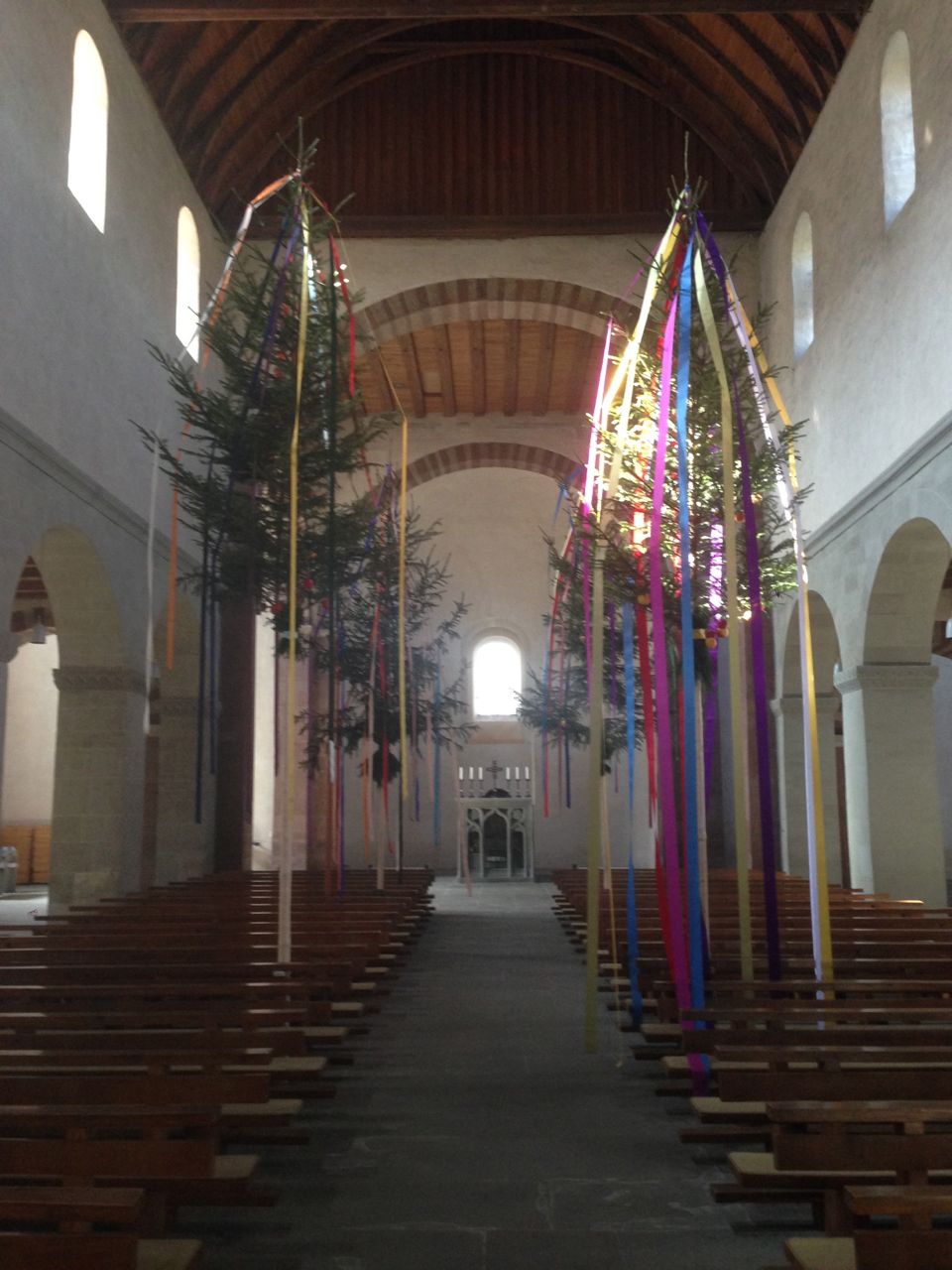
Reichenau
Terrorism in the Middle East
The Economist and Tom Segev in the New York Times reviewed “Anonymous Soldiers,” Bruce Hoffmann’s book on Israel’s origins.
The Economist largely accepts the notion that Irgun terrorism and America’s support for Zionism pushed Britain out of Palestine. It concludes:
On the Haganah’s broader influence, Mr Hoffman notes that al-Qaeda’s Afghan library had a copy of Begin’s “The Revolt”, but does not ask why so many Palestinian prisoners take Israeli university courses on how Jews established their state. Much of what they do, including building terror tunnels, bombing transport nodes, lobbing mortars at residential neighbourhoods and burying arms dumps in places of worship, has antecedents in Jewish militancy. Israel knows Palestinian methods and it has an array of anti-terror legislation which, had Britain responded similarly, might have aborted the future state.
According to Segev, in contrast, Hoffmann over estimates the impact of terrorist acts against colonial Britain committed by Menachem Begin’s Irgun. Statehood for Israel would have come anyway.
Philippa Perry’s “How To Stay Sane”
Philippa Perry’s short book provides a succinct perspective on mental health. Perry argues that mental disorders fall into two groups: one associated with behavior that displays a tendency to stray into chaos; the other with behavior that manifests itself in excessive rigidity. She discusses the structure of the brain and the role of nature vs. nurture in integrating emotions and reasoning. The former rules.
Perry points to several areas that are central to successfully navigating between chaos and rigidity:
- Self-observation: Wisdom and sanity build on a non-judgemental, self-observing attitude that fosters self-awareness and avoids self-justification. Self-observation amounts to re-parenting oneself. It helps develop compassion (internal and external) and it grows the brain. It requires to use feelings rather than be used by them. Keeping a diary helps, as do prayers or meditation. “Toxic chatter” doesn’t.
- Relating to others: Brains need brains; nurturing relationships are key to staying sane. True dialogue requires honesty and thus, vulnerability. “Adhering to strict guidelines about how to behave around others is a form of rigidity. Not being mindful of your impact upon others is a form of chaos.” The “daily temperature reading” fosters emotional honesty.
- Stress: Positive stimulation is fruitful; it fosters learning, creativity and brain plasticity and it strengthens the immune system. But it must not become overwhelming as to trigger panic and brain dissociating. Physical activity generates good stress.
When things go wrong Perry recommends to aim at re-writing one’s narrative:
- Personal narrative: Grasping one’s guiding beliefs helps developing new perspectives. Narratives are co-constructed and form minds. They pass down “identity, wisdom and experience” from generation to generation. Telling one’s own story helps gain distance and independence, and it creates “a place of freedom” (Perry refers to Victor Frankl’s Man’s Search for Meaning). Narratives are self-reinforcing; a genogram can help uncover and trace their roots. But stories are flexible, they can be changed, and so can lives that build on them. “Creating a consistent self-narrative that makes sense and feels true to ourselves is a challenge at any stage in life.” Optimism is productive and self enforcing; but hearing good news must be learned. Fear of losing love comes with penny-pinching. Certainty is a trap.
Britons’ Genes
The Economist reports about research on genetic differences among UK residents and the implications of the findings.
“On the Credibility of the Euro/Swiss Franc Floor: A Financial Market Perspective”
Markus Hertrich and Heinz Zimmermann argue in a working paper that after August 2014, financial markets priced in a significant probability that the Swiss National Bank would abolish the exchange rate floor vis-a-vis the Euro. Hertrich and Zimmermann write in the abstract:
We observe a drastic increase in the break-probabilities after August 2014, reaching a level of nearly 50%, which was the level before the announcement of the details of the “Draghi put” in September 2012. The credibility of the SNB in maintaining the floor, as seen from the option market, was thus substantially lower than publicly claimed.
IMF Recommendations for Switzerland
The concluding statement of the IMF mission to Switzerland (consultations under Article IV) includes the following top 5 recommendations:
- Ease monetary policy further to help limit an expected slowdown in growth and reduce risks related to very low inflation.
- To further support growth, allow fiscal automatic stabilizers to operate freely. If the downturn is more severe than expected, consider discretionary fiscal easing.
- Adopt pension reform to ensure the sustainability of the safety net for future generations.
- Raise banks’ minimum leverage ratio requirements to more ambitious levels to ensure banks have adequate capital to weather future shocks without recourse to public support.
- Pay bank auditors from a FINMA-managed, bank-financed fund rather than by the bank that is being audited to avoid conflicts of interest.
The IMF also calls for an overhaul of the deposit insurance scheme. It sees three risks to its central scenario:
- Risks related to low inflation.
- Uncertainty about EU relations and immigration.
- Global economic environment.
The Euro Area as a System of Currency Boards?
Willem Buiter argues in a Citi research note that due to limited risk sharing, the system of Euro area national central banks has morphed into a system of currency boards.
Greek Complaints about the ECB
In the FT’s Brussels Blog, Peter Spiegel links to Alexis Tsipras’ letter to Angela Merkel and comments on it.
German Reparations
Reinhard Müller discusses legal aspects of recent Greek demands for German reparations in the FAZ. In the past, both German and international courts have ruled against similar demands.
In the NZZ, Elena Panagiotidis reports about the atrocities committed by German occupying forces during World War II and reviews the history of unsuccessful Greek demands for reparation (by government) and compensation (by individuals).
Addendum (March 25):
An article in The Economist provides still another perspective.
Postscript on Belgrade
The (once?) famous b92 station and Christen Farmer‘s b92 blog “Grumpy in Belgrade” (also published as a book). Nicola Tesla museum and airport. Corruption measures compiled by Transparency International. Euro Money country risk assessment. Saint Sava’s Temple, “Belgrade’s Sagrada Família.” Property market and country assessment by Global Property Guide.
German Migration
The Economist reports about migration within Germany: People move from rural to urban areas, in particular in the East. The figure from the Economist:

Foreigners in Zurich
Iwan Städler reports in the Tagesanzeiger datenblog about trends in the shares of foreign nationals living in Zurich. In 1912, 34% of residents were non-Swiss (and 21% were German). Today, the corresponding figures are 32% and 8%.
National Bank of Serbia
The NBS occupies a beautiful 19th century residence with a visitors’ center in Belgrade’s city center as well as a large modern complex nearby.
In 1875, the first Dinar was minted. After Serbia’s independence in 1878, the country joined the Latin Monetary Union and Dinar and Franc could be exchanged at parity. In 1884, the Privileged National Bank of the Kingdom of Serbia was established. A businessman contributed to the capital of the Bank and served as governor. The National Bank continued to operate as the Kingdom of Serbia turned into the Kingdom of Serbs, Croats and Slovenes (1918); the union of South Slav states; Yugoslavia; and the Republic of Serbia (Videos).
Serbia
The Serbian language uses both the Cyrillic and the Latin alphabet; it’s the only European standard language with complete synchronic digraphia.
The Serbian economy continues to suffer from the sanctions imposed in the 1990s and it also suffers from very severe brain drain. Between 2009 and 2014, the public debt quota grew from 30% to more than 60%; inflation has fluctuated between up to 14% and, recently, below 2%; and the interest rate still exceeds 7% (source). The Dinar has depreciated against the EUR at a rate of roughly 4% per year over the last five years (source). Household debt is mostly denominated in EUR or USD.
“Inflation wegen hoher Staatsschulden (Inflation Due to High Public Debt)?,” FuW, 2015
Animated Historical Maps (πάντα ῥεῖ)
International Money Transfers
Cross-border (-currency) money transfers are bound to become cheaper, due to TransferWise, azimo, worldremit and the like.
Vinča
A few miles east of today’s Belgrade lies a Vinča settlement that dates back to 5000 BC. The Vinča civilization relied on fishing, farming and mining (copper); the Vinča people built houses along streets; and they exchanged goods. They also used an early form of proto-writing (sources: Belgrade tourism site, Wikipedia).
Alex Whitaker writes on his site Ancient Wisdom:
In 1908, the largest prehistoric Neolithic settlement in Europe was discovered in the village of Vinca, just a few miles from the Serbian capital Belgrade, on the shores of the Danube. Vinca was excavated between 1918 and 1934 and was revealed as a civilisation in its own right. Indeed, as early as the 6th millennium BC, three millennia before Dynastic Egypt, the Vinca culture was already a fully fledged civilisation. A typical town consisted of houses with complex architectural layouts and several rooms, built of wood that was covered in mud. The houses sat along streets, thus making Vinca the first urban settlement in Europe, but being far older than the cities of Mesopotamia and Egypt. And the town of Vinca itself was just one of several metropolises, with others at Divostin, Potporanj, Selevac, Plocnik and Predionica.
Contagion in the Euro Area
In a Vox column, Michal Kobielarz, Burak Uras and Sylvester Eijffinger argue that the re-emergence of spreads between peripheral and core Eurozone countries at the beginning of the Greek crisis reflected contagion fears. They write:
… we explicitly model the endogenous bailout decision of the European Monetary Union. We assume that:
- A country that defaults on its sovereign debt can no longer remain in the EMU, unless it is bailed out;
- The union values each country’s membership and, therefore, suffers a loss if a country exits; and
- The marginal loss associated with allowing a country to leave the union is highest if that particular country is the first to leave (first-exit effect).
… once the first country is gone, letting a second country default and leave the union is not that costly anymore.
Auschwitz II Birkenau

Krakow

Polish History
Frequent territorial change characterizes the eventful and troublesome history of Poland (video). This history is evident all over the place when walking the streets of Warsaw, for example in the historic city that was destroyed in 1944 and rebuilt afterwards, the memorials in its vicinity, or Stalin’s unloved gift to the Polish nation. The Poles value their new found freedom and are acutely aware of threats to it.
Bank Deposits in Greece
An article in The Economist contains the following figure:

Greek Proposal to Improve Tax Morale
Yanis Varoufakis’ recent letter to Jeroen Dijsselbloem contains proposals to outsource tax enforcement.